
The Quiet Side of Sintra Most Visitors Never See
Exploring hidden gems in Sintra, from Convento dos Capuchos to the forest roads and viewpoints most travelers overlook.
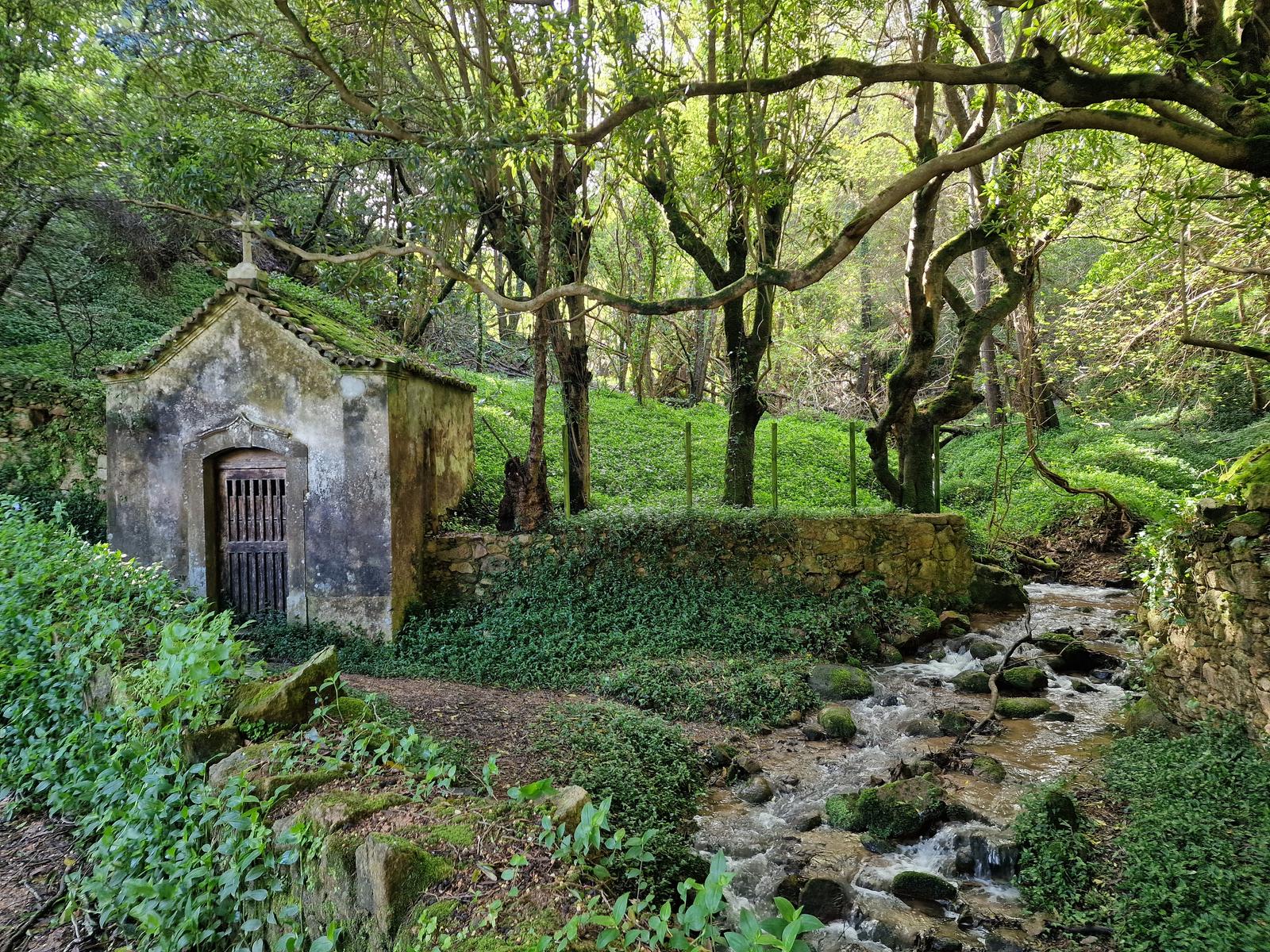
Most people arrive in Sintra with a kind of invisible checklist already forming in their mind.
Pena Palace, Quinta da Regaleira, the Moorish Castle if time allows. The same sequence, repeated every day in slightly different variations. Buses come and go, queues form and dissolve, and by mid afternoon there is often a familiar kind of fatigue in the way people move through it.
I understand why it happens. Sintra has a way of pulling attention in too many directions at once.
But there is another version of Sintra, the quieter one, made of forest roads, overlooked viewpoints, and places most visitors never reach.
On this visit, I found myself drawn entirely to that side of the landscape.
So I avoided the usual route entirely.
Convento dos Capuchos and the Hidden Side of Sintra
The place I kept returning to in my mind was Convento dos Capuchos.
Not because it is one of the famous monuments, but because it sits in a very different rhythm from the rest of Sintra, deeper in the forest and away from the main flow of visitors exploring the well known attractions.
Access by public transport was fully eliminated, which quietly changed who tends to arrive there. It is no longer part of a simple day loop between the main palaces. It becomes something you choose intentionally, or miss completely.
For that reason alone, it feels like one of the most authentic hidden gems in Sintra.
Most people who reach it now come through the Serra de Sintra, either on foot or through quieter local routes that pass through the forest instead of the main roads.
On this day, I arrived through a slow drive across those same hills, where the landscape starts to take over the sense of direction without asking.
The road narrowed as we climbed. The forest thickened around us. Light shifted between open stretches and deep shade. At times the trees felt close enough to make the road feel temporary, as if it had only been placed there for a while.
By the time we arrived, the more familiar version of Sintra already felt far away.
There were almost no people there.
And that absence changes everything.
A Hidden Gem Built to Disappear Into the Landscape
The convent does not try to present itself.
Built in the 16th century by Franciscan monks, Convento dos Capuchos was designed around restraint, simplicity, and separation from excess. Small rooms, cork lined walls, low ceilings, and stone spaces that feel more shaped by necessity than intention.
Unlike the palaces that define Sintra’s tourist image, this is not a place built to impress.
It is a place built to disappear into its surroundings.
Walking through it, there is very little to “see” in the traditional sense. Instead, there is time to notice what usually gets overlooked in more visited Sintra landmarks. Moss slowly spreading across stone. Narrow passages shaped by centuries of use. Wind moving freely between forest and structure.
It does not separate itself from nature.
It becomes part of it.
The Forest Roads Toward Peninha
Later, the road continued upward toward Santuário da Peninha, another one of the quieter places in Sintra often included in more discreet hidden gems routes through the mountains.
This part of Sintra is where the landscape starts to shift. The forest still surrounds you, but it opens in layers, and the presence of the Atlantic begins to feel closer even before it is visible.
The drive itself becomes part of the experience rather than a transition between points.
This entire stretch is often included in small local hidden gems tours in Sintra, which focus less on the main monuments and more on the forest roads, viewpoints, and lesser visited sites that connect them. Some routes move quickly between famous landmarks, while others slow down and allow more time for the mountain itself. Both approaches exist, depending on what kind of experience people are looking for.
Personally, I think Sintra changes completely when you allow room for the quieter spaces between destinations.
Then, suddenly, the land opens.
A View That Feels Larger Than Sintra Itself
Peninha does not announce itself gently.
One moment you are still inside dense forest, and the next the landscape drops away in every direction. The coastline stretches toward Cascais, Lisbon appears faint in the distance, and the Atlantic expands outward with no visible limit.
The wind up there takes over everything. It moves through the sanctuary and around it, making stillness feel temporary.
The building itself is simple, almost understated compared to what surrounds it.
But it is not the structure that stays with you.
It is the scale of the landscape.
Standing there, there is a sense that distance itself becomes visible. Not just physical distance, but the way Sintra connects forest, mountain, and ocean into a single continuous space.
The Hidden Gems Side of Sintra
Sintra is often described through its most famous monuments, and they are worth seeing for good reason.
But the hidden gems of Sintra exist in a different layer of the landscape.
They are in the forest roads between landmarks, the quieter viewpoints, and the places that do not sit on the usual itinerary.
The more time you spend in those spaces, the less Sintra feels like a list of attractions, and the more it feels like a continuous landscape you move through.
Final Thought
There is nothing wrong with following the main route through Sintra. Most visitors only have a short time, and the main monuments exist for a reason.
But there is another version of Sintra that only appears when you step slightly away from that path.
It is quieter, less structured, and harder to describe without simplifying it.
And if there is one way I would personally recommend experiencing that side of Sintra, it would be through one of the more discreet hidden gems tours in Sintra. These routes are not the most visible option, and they are not designed for mass tourism, which is exactly why they offer a very different experience of the mountains.
Sintra does not reveal its quieter side to everyone.
But it does open it to those who go looking for it differently.
Tagged: